Call Us 24/7


Uzbekistan is a captivating country in Central Asia, renowned for its magnificent Silk Road cities, impressive Islamic architecture, colourful bazaars and rich cultural heritage. It shares borders with Kazakhstan, Kyrgyzstan, Tajikistan, Afghanistan and Turkmenistan.
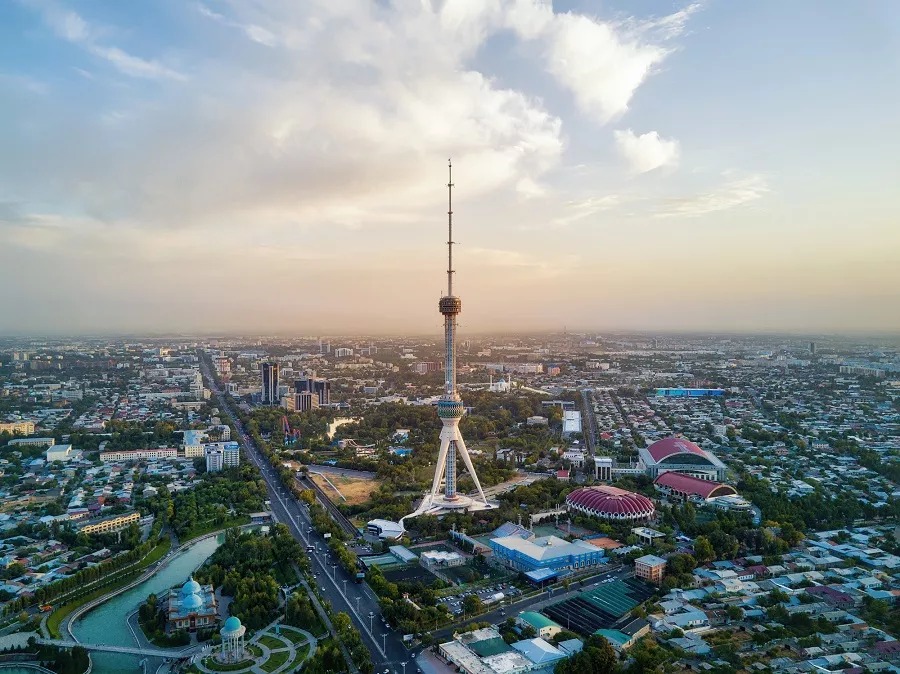
The capital, Tashkent, is a modern and vibrant city featuring broad avenues, green parks, museums, traditional markets and contemporary architecture. The historic cities of Samarkand, Bukhara and Khiva are among Uzbekistan’s most famous destinations. Their ancient mosques, madrasas, mausoleums and intricately decorated monuments reflect the country’s important role along the Great Silk Road.
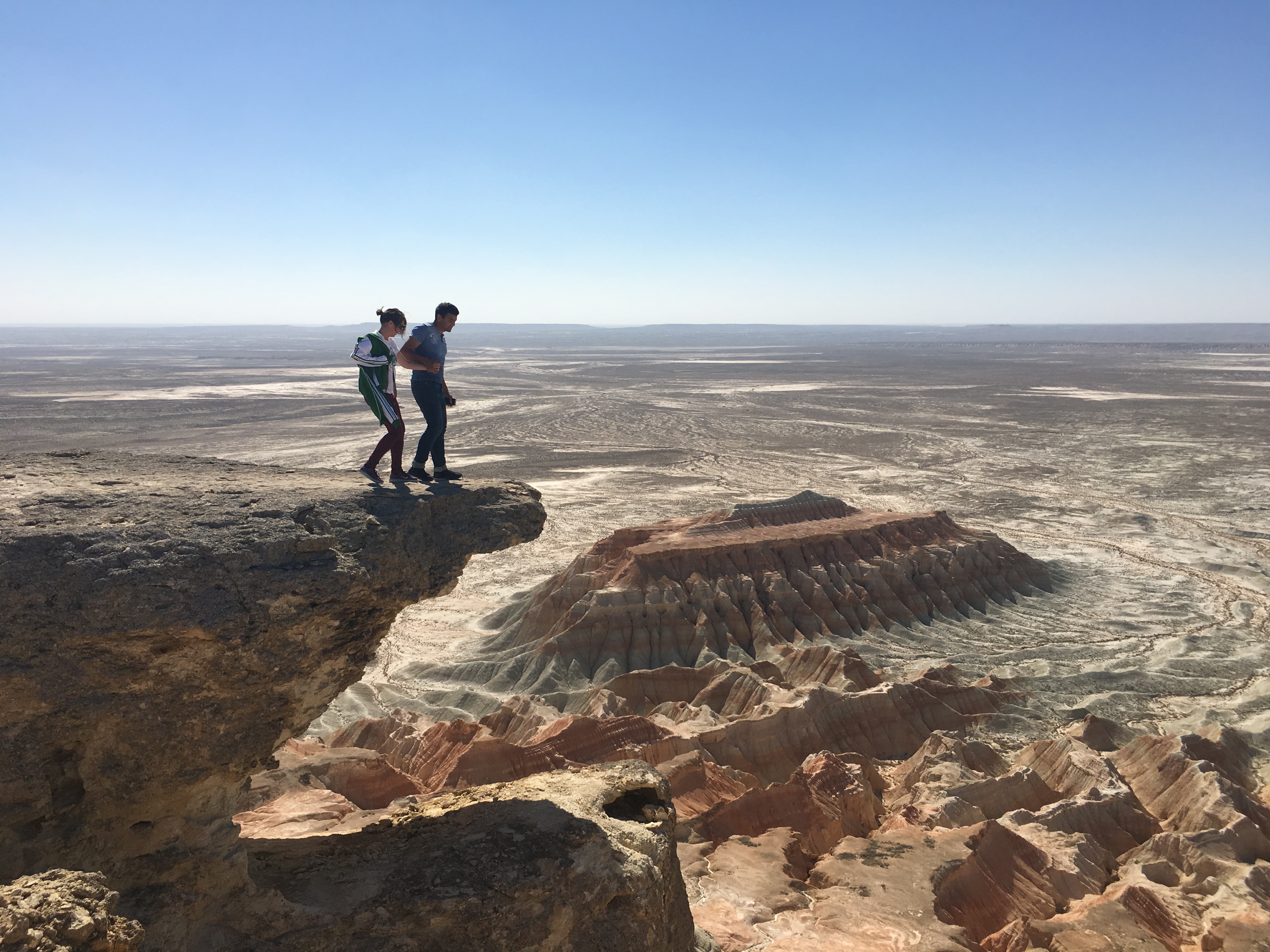
Visitors can explore Samarkand’s magnificent Registan Square, the historic centre of Bukhara, the walled old city of Itchan Kala in Khiva and the birthplace of Amir Timur in Shakhrisabz. Uzbekistan also offers desert landscapes, mountain regions, traditional villages and the unique scenery surrounding the Aral Sea.
Uzbek culture is expressed through traditional music and dance, colourful textiles, ceramics, woodcarving, national cuisine and warm hospitality. A journey through Uzbekistan offers an unforgettable combination of ancient history, magnificent architecture, authentic traditions and modern city life.
The Aral Sea was once the largest enclosed saltwater lake in Central Asia. Until the 1960s, it covered approximately 68,000 km², making it the fourth-largest inland sea in the world and the second-largest on the Eurasian continent after the Caspian Sea. Because of its immense size, it was called a “sea.” During the Soviet era, however, vast quantities of water from the Amu Darya and Syr Darya rivers were diverted for agricultural irrigation, particularly for cotton plantations. As a result, the Aral Sea has lost almost 90% of its water over the past 60 years. This dramatic decline caused salinity levels to rise, leading to the disappearance of many plant and animal species in and around the lake. The local climate also changed, bringing hotter summers and colder, drier winters. By 1989, the sharp decline in water levels had divided the Aral Sea into two separate bodies of water: The North Aral Sea, also known as the Small Aral Sea The South Aral Sea, also known as the Large Aral Sea In 2014, the eastern part of the South Aral Sea dried up completely, leaving only 7,297 km² of water surface. Although temporary spring floods in 2015 briefly increased the area to 10,780 km², it soon contracted again, reaching 8,303 km² by the autumn of the same year. Over the past 40 years, the surface area of the Aral Sea has decreased almost fourfold. The salinity of its water has risen sharply from 9–10 g/L to 70–84 g/L. Meanwhile, the shoreline has retreated by 80–100 kilometres, exposing more than 4.5 million hectares of former seabed. Today, the Aral Sea is divided into three separate parts. By the 1980s, Muynak—once a thriving fishing town and one of Uzbekistan’s principal ports on the Aral Sea—had become separated from the shoreline. Today, its landscape is marked by rusting ships abandoned in the desert, earning it the ominous name “the Ship Graveyard.” The disappearance of the Aral Sea is recognised as one of the greatest environmental disasters in modern history. Scientists, activists and international organisations continue to study its consequences, while travellers from around the world visit the region to witness this devastating transformation firsthand. Despite its tragic past, the Aral Sea region now offers unique opportunities for tourism. Visitors can explore historical routes, visit Muynak and learn about ongoing efforts to combat desertification and restore parts of the ecosystem.
Tashkent is one of the oldest cities in Uzbekistan and Central Asia, with a history spanning more than 2,200 years. Today, it is the capital of the Republic of Uzbekistan. The city covers an area of 327.9 km², and its permanent population exceeds three million. In 2007, Tashkent was declared a centre of Islamic culture. This recognition reflects the city’s numerous historic Islamic monuments, its close cultural connection with Islamic traditions, and the presence of important educational institutions such as the Tashkent Islamic University and the Imam Bukhari Tashkent Islamic Institute. Today, the famous Hast Imam Complex is one of the most popular attractions among local and international visitors. This architectural ensemble, dating from the 16th to the 20th centuries, surrounds the tomb of the renowned imam Abu Bakr Muhammad ibn Ali Ismail al-Qaffal al-Shashi. Both the cemetery and the surrounding architectural complex were named in his honour. The complex houses the sacred manuscript known as the “Uthman Quran,” traditionally associated with the reign of Caliph Uthman, who ruled from 644 to 656. Visitors from around the world come to the complex to see this revered manuscript, which is widely known throughout the Muslim world. Tashkent is also the political centre of the Republic of Uzbekistan. The capital is home to imposing national and international administrative buildings. Unlike many other cities, Tashkent is distinguished by its numerous theatres, museums, broad avenues, parks, modern sports stadiums, excellent entertainment venues and some of the country’s largest and most magnificent mosques. The city is also renowned for its metro system, considered one of the most beautiful in the world. Its elegant architecture, elaborate decoration, grandeur and refined artistic design attract visitors from many countries. Bukhara, with its magnificent architecture, rich history and vibrant culture, has fascinated travellers from around the world for centuries. Today, it is one of the most important tourist destinations in Uzbekistan and Central Asia. Recognised as a UNESCO World Heritage Site, Bukhara preserves hundreds of historical monuments reflecting its glorious past.
With a history spanning more than 2,500 years, Bukhara has made an invaluable contribution to world civilisation. Situated at the crossroads of the Great Silk Road, the city flourished as a centre of craftsmanship and commerce, developing a distinctive cultural and mercantile identity. Alongside its magnificent mosques and madrasas, Bukhara boasts majestic mausoleums dedicated to renowned scholars, splendid palaces, caravanserais, traditional bathhouses and monumental structures crowned with turquoise domes. The lively bazaars of its old quarters transport visitors into the atmosphere of an Eastern fairy tale. Bukhara has the largest concentration of historical monuments in Uzbekistan, and its ancient streets are best explored on foot. During the Middle Ages, Bukhara was regarded as one of the holiest Muslim cities in Central Asia, attracting scholars, thinkers and travellers from across the Islamic world. Many internationally renowned figures were born in or closely associated with the region, including: Imam al-Bukhari (9th century) — compiler of one of the most authoritative collections of hadith in the Islamic tradition. Abu Ali ibn Sina, known as Avicenna (10th–11th centuries) — a legendary physician, philosopher and scholar whose medical writings profoundly influenced Europe and the Islamic world. Bahauddin Naqshband (14th century) — the spiritual master associated with the Naqshbandi Sufi order and a key figure in Islamic mysticism. Thanks to the contributions of its scholars, poets, architects and philosophers, Bukhara earned prestigious titles such as “Bukhara-i Sharif,” meaning “Noble Bukhara,” and “the Summit of Islam.” During the Middle Ages, only seven cities were granted the distinguished title “Sharif” in recognition of their religious importance. Bukhara was counted among them alongside Mecca, Medina, Mazar-i-Sharif, Baghdad, Jerusalem and Damascus. By the 9th century, Bukhara had also received the title “Qubbat al-Islam,” meaning “Dome of Islam,” confirming its status as a major Eastern centre of Islamic culture, ethics and law. Today, Bukhara remains one of Uzbekistan’s most visited cities and continues to develop as a leading tourist destination. Whether strolling through its ancient streets, admiring its historical landmarks or immersing themselves in its rich cultural heritage, visitors embark on a journey through centuries of history, spirituality and architectural splendour.
The renowned city of Samarkand is frequently mentioned in Eastern folk tales. Today, it is a real city recognised worldwide for its ancient history and architectural monuments. Among the many celebrated cities of antiquity, only legendary Samarkand is known as the “Heart of the Great Silk Road.” Since ancient times, it has been described as the “Mirror of the World,” the “Pearl of the East,” the “Beauty of the Earth” and the “Rome of the East.” Like Rome, Athens and Babylon, Samarkand has a history spanning more than three thousand years. Since its foundation, the city has played an important role in the political, economic and cultural life of Central Asia. Its location at the crossroads of the Great Silk Road contributed to the development of ancient crafts, including weaving, the production of renowned Samarkand paper, pottery, blacksmithing, baking, confectionery, embroidery and many others. The earliest written references to Samarkand date back to 329 BC, when it was conquered by the Greco-Macedonian army led by Alexander the Great. During the 6th and 7th centuries, Samarkand became part of the Turkic Khaganate. In the late 7th and early 8th centuries, Arab armies arrived in the region, conquered Central Asia and spread Islam, which subsequently became the predominant religion of the local population. At the beginning of the 13th century, Samarkand was occupied by the Mongol army led by Genghis Khan. The city was almost completely destroyed, and thousands of its inhabitants, both young and old, were killed. From the middle of the 14th century through the 15th century, Samarkand and Central Asia experienced an unprecedented revival in their economic, political, social and cultural life. Amir Timur, also known as Tamerlane, was a renowned military commander and ruler who founded the great centralised state of Mawarannahr, or Transoxiana. His empire extended from the borders of present-day eastern China to Istanbul and from northern India to the Volga region. During Timur’s reign, Samarkand was chosen as the capital of this vast empire. This period became one of the most prosperous and celebrated chapters in the city’s history. Large-scale urban development and extensive improvement works were carried out. Under Timur and the Timurids, Samarkand reached the height of its prosperity. Today, Samarkand’s monuments remain magnificent and imposing. Throughout the city, visitors can feel the breath of ancient history preserved in its ruins, madrasas, mausoleums and minarets. In later periods, Samarkand became part of various Central Asian states and khanates. From the 19th century, it was under the rule of the Russian Empire and subsequently formed part of the Soviet Union until Uzbekistan gained independence. The architecture of ancient Samarkand has always fascinated visitors with its grandeur, splendour, dazzling blue tilework, magnificent domes and soaring minarets. Samarkand has a continental-subtropical climate. Its favourable geographical location and pleasant climate have long attracted travellers. The architectural and historical monuments of Samarkand are included on the UNESCO World Heritage List.
Khiva is a city straight out of One Thousand and One Nights. Walking through its ancient streets, surrounded by historic buildings, visitors feel as though they have travelled back in time. For this reason, Khiva is often called an “open-air museum.” It is one of the few cities in the world whose historic urban landscape has survived in a remarkably well-preserved state. Its monuments display some of the finest works created by the master craftsmen of the Khorezm oasis. Ichan-Kala, Khiva’s inner walled city, is the only fully preserved historic city of its kind in Central Asia. Its history and architectural heritage are closely connected with the cultural development of Khorezm, one of the world’s oldest centres of civilisation. On 12 December 1990, during UNESCO’s 14th session in Canada, Ichan-Kala became the first site in Central Asia to be inscribed on the UNESCO World Heritage List. During the Middle Ages, Khiva and the wider Khorezm region were important centres of scholarship. Khorezm was home to the renowned Abu Abdullah Muhammad ibn Musa al-Khwarizmi, the great scholar regarded as the founder of algebra. The term “algebra” derives from the title of one of his celebrated works, while his scientific legacy played a fundamental role in the development of mathematics and human civilisation. At that time, Khorezm was also a major centre of international commerce and an important part of the Great Silk Road.
Shakhrisabz, meaning “Green City,” is one of the oldest cities in Uzbekistan and today ranks among the country’s most popular tourist destinations. It is the birthplace of Amir Timur, also known as Tamerlane, one of the most influential figures in world history. Amir Timur, founder of the powerful state of Mawarannahr, or Transoxiana, chose Samarkand as the capital of his empire. Nevertheless, he devoted constant attention to the improvement of his native city, undertaking extensive construction and development projects. In effect, Shakhrisabz became the second capital of the empire after Samarkand. By order of the ruler, the finest architects, builders and masters of architectural decoration were brought to the city. They exchanged their traditions and construction experience with local craftsmen and worked together to create magnificent buildings. Outstanding monuments such as the Ak-Saray, or White Palace, as well as mausoleums and mosques dating from the 14th to the 19th centuries, are among the architectural treasures of Shakhrisabz. Shakhrisabz is believed to be approximately 2,700 years old, making it comparable in age to Rome, the renowned “Eternal City.” The city contains numerous iconic landmarks, and its historic centre was inscribed on the UNESCO World Heritage List in 2000.
Surkhandarya is located in the southern part of Uzbekistan. The region is distinguished by its abundance of sunny days and sharp contrasts between hot and cold weather. The Surkhandarya oasis has made an invaluable contribution to human civilisation and is recognised as one of the world’s ancient centres of culture. It is considered one of the earliest areas of human settlement. Remains of Middle Palaeolithic settlements have been discovered in the Baysun Mountains. At the Teshik-Tash cave, archaeologists found the remains of an eight- or nine-year-old Stone Age child. This discovery became internationally renowned as the remains of a Neanderthal child. Surkhandarya is a cultural and historical region where folklore, writing and literature flourished. The Islamic theologian and hadith scholar Al-Hakim al-Tirmidhi, who lived during the 8th and 9th centuries, lived and worked in ancient Termez. The great Andalusian Islamic scholar Muhyiddin Ibn al-Arabi (1165–1240) considered himself a follower of Al-Hakim al-Tirmidhi. Imam al-Tirmidhi compiled numerous hadiths—accounts of the words, deeds and approvals of the Prophet Muhammad (peace be upon him), which constitute Islam’s second most important source of guidance after the Qur’an. His renowned works include Al-Jami‘ as-Sahih, also known as Sunan al-Tirmidhi, Kitab al-‘Ilal, Kitab az-Zuhd and others. Of Surkhandarya’s 359 historical monuments, 294 are archaeological sites, 26 are architectural monuments and 39 are monumental works. In connection with the 2,500th anniversary of Termez, several important historical and archaeological monuments were restored in 2001–2002. These included the famous Jarkurgan Minaret dating from the 12th century, the Sultan Saodat complex from the 10th–17th centuries, the remains of the fortress of the Chaghaniyan state in Denau, the Al-Hakim al-Tirmidhi complex from the 11th–15th centuries and the remains of the Zurmala Tower in Old Termez. These monuments are distinguished by their antiquity and were constructed in accordance with the architectural traditions of Khorasan. In recent years, growing numbers of people have become interested in the history and monuments of the Surkhandarya oasis, which have also attracted the attention of foreign archaeologists. The region is equally renowned for its magnificent mountains, breathtaking landscapes, ancient caves and prehistoric rock paintings, all of which fascinate visitors. Even today, many of Surkhandarya’s historical sites remain unexplored and await archaeological excavation.
Today, the Fergana Valley is one of Uzbekistan’s emerging tourist destinations. Surrounded by the mountains of Central Asia, the valley encompasses three regions: Fergana, Namangan and Andijan. Together, they form one of the country’s most densely populated areas. The Fergana Region, with a population of approximately 3,752,000 in 2019, is currently the most visited part of the valley. To attract more visitors, the region continues to develop and improve its tourism infrastructure. The cities of Kokand, Rishtan and Margilan have become particularly popular destinations, offering visitors a rich combination of history, traditional craftsmanship and distinctive local culture.
Kokand was the capital of the Kokand Khanate, one of the three major khanates of Central Asia during the 18th and 19th centuries. The period of the khanate holds an important place in the history of modern Uzbekistan and the wider Central Asian region. Located in the Fergana Valley, Kokand is home to numerous ancient sites and historical monuments. According to historians, the city’s history stretches back more than 2,000 years. Since ancient times, Kokand has served as an important crossroads for caravan routes along the Great Silk Road. Today, the city continues to play a significant role in regional transport and connectivity.
Rishtan is located near the city of Kokand. For centuries, it served as an important military and economic centre. Chinese, Indian and, later, Russian merchants stopped here to conduct trade. Pottery has flourished in Rishtan since ancient times. The works of its renowned potters were highly prized in eastern markets. Even today, bowls, jugs and other ceramics handcrafted by Rishtan artisans are well known not only in Uzbekistan but also in many other countries. The city is home to several distinctive schools of pottery, whose workshops, traditions and craftsmanship are of great interest to international visitors.
Margilan is a small city that has been renowned throughout the world for thousands of years for its skilled artisans and scholars. It is believed that by the 9th century, Margilan had become one of the most important cities along the Great Silk Road. During the period of the Kokand Khanate (1710–1876), the city served as one of the khanate’s strategically important trading centres. Margilan is also home to the Yodgorlik traditional silk factory, which produces high-quality items from national silk. The city has always been famous for its handmade silk and cotton fabrics, as well as its silk carpets. Today, the factory is open to visitors, allowing them to observe the traditional production process. Margilan’s vibrant oriental-style bazaar is another fascinating attraction for international tourists.
Gallery
Discover some of our finest work captured through visuals
Testimonials

Moscow, Russia

I was impressed by the friendly service and attention to detail. The itinerary was carefully planned, making our family holiday comfortable and truly memorable.

Istanbul, Türkiye
This was my first booking with Gayrat travel, and the experience exceeded my expectations. The staff were polite, helpful and responsive. Everything was well organised from beginning to end.

London, United Kingdom
The Gayrat travel team organised my journey professionally and answered all my questions promptly. Everything went smoothly, and I felt supported throughout the trip.

Dubai, United Arab Emirates
Gayrat travel helped me choose a tour that matched my schedule and budget. Communication was clear, and every arrangement was completed on time. I highly recommend their services.

Yaoundé, Cameroon
Gayrat travel made my travel experience easy and enjoyable. The team was friendly, attentive and always ready to help. Every detail was organised professionally, and I felt supported throughout the entire journey.
We take care of every detail so you can travel with confidence and ease.

Call Us 24/7
Gayrat Travel © All Rights Reserved.